Razorcake #154 (October 2026 / November 2026) – New Zine
Razorcake 154, Drakülas, Sux, Dead Bob, Gary Panter, ABC No Rio
“There’s something really beautiful about something really ugly.” –Mike Wiebe, Drakülas
Drakülas interview by Dale Drazan and Todd Taylor
Introduction by Todd Taylor
I’m a sucker for well-constructed “punk rock operas.” Those quotation marks are bearing a lot of weight there. Think of the storytelling acumen of Smogtown’s Führers of the New Wave, not a prog rock band with an instrument list longer than War and Peace or a CVS receipt. While Smogtown repped the West Coast by adapting themes from Repo Man—radiation, brain dead homeowners associations, and endless cul-de-sacs of suburban decay—Drakülas are the band at the edge of the frame at the gang meetup at the opening of The Warriors. Late ’70s NYC, pre-AIDS, pre-Giuliani, cocaine-as-work-vitamins, hungry video game arcades, lurid neon flickering, and the specter of all sorts of violence lurking on the other side of endless broken windows. Floors sticky from spilled human fluids. Used condoms tied off like the world’s saddest balloon animals littering gutters as kids walk to school. Switchblades in hands and eyes.
These are not tales of romance, of idealized futures past, but the hiss of spray paint scrawling warnings, often in code. Fortunately, we’re all punks here, so you’ve already got the decoder ring. All you need to do is listen closely to cash in on the Drakülas’ rewards program: Raw Wave, Terminal Amusements, and now Midnight City.
There are two brains at work constructing the Drakülas’ world: Mike Wiebe and Zack Blair. Lyricist/writer Wiebe has always had a handle on empathy in unexpected, touching ways. In Drakülas, he gets inside the heads of various subjects, singing songs from their points of view. Not only does he portray himself as a Drakülas gang member, but a raft of other characters: bone-tired sex workers, striking garbage workers, art Svengalis, lonely hearts, and film masters of transgression. You already may be familiar with his singular work in Kid Chaos, Chop-Saki’s, Ghost Knife, High Tension Wires, or Riverboat Gamblers. If not, here’s my nudge for you to check out all of those outfits.
But say you aren’t a reader when listening to music. Or a listener of words when songs are playing. You just want fuck-yeah songs that skate on icy synths, with guitar work that sticks in your mind like the burnt rubber of a quickly accelerating Trans-Am towards an uncertain fate that looks uncannily like a brick wall. Zach has you covered. It’s a bit disorienting to cite his résumé: Hagfish, Gwar, Rise Against. But that ache, that feeling of being more prey than predator, the permanent midnight of Drakülas’ world wouldn’t be half as compelling without his garroting musical work. Two bodies, one mind.
Ready to get patched in? Ready to spill a little blood?
“Can you count, suckers? I say the future is ours… if you can count!”
Sux interview by Daryl Gussin
Beyond the leather jackets and sneering stage antics, Sux represents something much more defiant. Something ungovernable that defies complacency and complicity. They may be exercising their right to have a good time, but it’s not without standing on something that’s too important to ignore. Take their song “Kick Ur Ass,” for example. What might be misconstrued as a crude street fighter’s ballad is a look into the realities of gender-based violence. Inquiring minds will find a very candid look into the life of someone who inhabits a marginalized, targeted body, and their promise to fight back and fully defend themselves. “Just when I do the things I wanna do, some guy fucks with me,” countered with, “I’m not a fighter, it’s not like me, but put your hands on me, I’ll make you pay.” With the distortion as their witness, they take their stand. Raw rock’n’roll as a conduit for empowerment in a hostile society.
Sux is funny. Sux is righteous. Sux can kick ur ass. Sux is punk as fuck.
Dead Bob interview by Jiffy Marx
Lucky 8s at the Neighborhood Hotdog Party
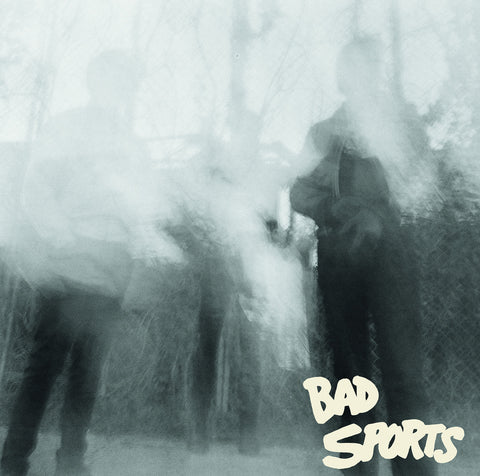
On an unusually sunny February day, I attended a hot dog party at a Vancouver Special—a mid-century two-story house common to the city—not far from where I live. I’d come to interview Dead Bob, which is—spoiler alert—not the solo incarnation of John Wright from seminal Canadian prog punks Nomeansno. My wife, who saw them numerous times as an impressionable teen at Vancouver area all-ages shows in the mid- to late-’90s, describes Nomeansno as being a more technically complex version of punk than their first wave predecessors and contemporaries. Brothers John and Rob Wright started in 1979 originally as a powerhouse bass and drum duo, then expanded to include guitar and a second drummer at different points in their thirty-plus year career. Heralded by Jello Biafra and his Alternative Tentacles label, they followed in the footsteps—or maybe more likely the tire tracks—of punk trailblazers D.O.A., releasing music and touring the world on their own terms. Influenced by punk, but adding elements of metal and progressive rock, their sound has been described as proto-math or jazz punk, but they really don’t sound exactly like anything that came before or after them until now.
Following Nomeansno’s demise, John took a hiatus from music to focus on his love of beer making, leading to a failed attempt at opening a bar in hopes of becoming a brewmaster. Back to the present, hanging out as a band, scarfing dogs with friends and neighbors before band practice, Dead Bob is a British Columbia supergroup of sorts and, like most bands, everyone has their roles. John may be the boss, but Ford is—maybe—second in command, or at least likes to clarify things. Byron is the comedian. Colin is soft spoken, but eloquent, and Kristy-Lee is maybe the most talented in a pool of insane musicianship, but so as not to embarrass her, let’s say she’s the modest one. They’re all seasoned veterans having played in various well known and lesser known British Columbia bands. Dead Bob’s debut album Life Like was released in 2023. Razorcake’s own Ty Stranglehold called it “deeply nostalgic yet fresh and new.” Both it and their latest album, Nothing Changes Everything,are on Wright’s Wrong Records. It’s also important for context to let you know that throughout the interview, all five members are donning fake moustaches for no reason that was ever explained to me.
Gary Panter Interview by Sean Arenas and Liz Hirsch
Introduction by Sean Arenas
When I was a teenager, my dad took me to see Masters of American Comics, an exhibition featuring Jack Kirby, Will Eisner, Winsor McCay, and Gary Panter, among others. As I stood in awe of these legendary artists, I found myself perplexed by Gary’s work: Who is this square-jawed Jimbo? What are these absurd, apocalyptic visions? Where are the superheroics of Captain America or the personal excavations of Robert Crumb?
Much like my introduction to punk through bands like Crass and Dead Kennedys, the art that initially repels me often becomes the art I return to most, grabbing hold of my subconscious and refusing to let go.
Years later, I encountered Gary’s work again during his residency at Pasadena City College. This time, something clicked. As I looked at his work—sometimes scratchy black-and-white illustrations, other times bursting with psychedelic color—alongside his preternatural ability to anticipate realities that felt both alienating and inevitable, I finally recognized him for the prolific master he had always been.
My appreciation for Gary only deepened after speaking with him. He’s honest, humble, and still, at heart, a culture nerd. And as you’ll soon discover, he always seemed to be exactly where he needed to be: among hippies in Texas, in Los Angeles during the late-1970s punk explosion, designing Pee-wee’s Playhouse (work that earned him three Emmys), and inspiring generations of artists to embrace what makes them weird and wonderful.
ABC No Rio: Out of Exileinterview by Daniel Makagon
ABC No Rio had been a model for doing community-based DIY shows in so many important ways. The hardcore matinees provided a communal alternative to violence-infused shows that had plagued some hardcore scenes, including New York City’s, and the space provided a place where punks could join with allies working in radical arts movements.
Finally, the punks and allies were able to acquire a building against all odds. While ABC No Rio was a model for punks in other areas who aspired to create volunteer-run show spaces or setting up DIY shows in houses or rented halls that were free from racism, sexism, and homophobia, this ability to acquire a building showed that we can dream big. But then the old building was leveled in 2016 to begin construction on a new building. What was hoped to be a one- or two-year project stretched out to a decade. That’s a long time in general, but in a punk context, multiple new generations of punks in New York and beyond missed opportunities to participate in shows at this important all-ages space.
As we approach the re-opening ABC No Rio, it’s a great time to revisit ABC No Rio’s history, what’s been happening during the past decade, and the opportunities that’ll come with the new space. I was thrilled to talk with three different ABC No Rio community members who’ve been involved with the space at various points in ABC’s history. Freddy Alva was there from the start, an early booker, and has been documenting No Rio’s history for a book about this important space. Dyami Bryant started booking shows at ABC in the early 2000s, and has been actively involved with maintaining the links between ABC and the punk community during the past decade through various “in exile” shows. And Gavin Marcus is the director of ABC No Rio. He’s been a key link among the various collectives that make up ABC and he has worked closely with New York City officials and city activists to make sure the new building can be a crucial space for various alternative communities to find a home.
“In Utah, the alpha and the omega is the Great Salt Lake.... It’s distressing it had to get this bad to move people to action, but now action is really happening.” –Donna Ramone (instagram)
“I was on the hunt for something new, something that reflected the times but refused to ignore the rot at the end of the twentieth century.” –Jim Ruland (instagram)
“Sex workers... It seems like everyone either uses us or shits on us. We are prophets, not just muses.”–Lorde Destroyer
“All the money goes to the spectacle.” –Sean Carswell (instagram)
“I will be performing while dressed as a gigantic one-eyeballed starfish to fulfill whatever real or imagined obligations I have to the dying art of showmanship.”–Rev. Nørb (instagram)
“Peace President” on a falling warhead, without any sense of irony. –Art Fuentes (instagram)
“I learned more about punk rock from Rebel Waltz, these harmony-singing elder statesmen than any corporate-tolerant major label mohawks could ever spit out.” –Rhythm Chicken (instagram)
“Taking issue with trans people playing in school sports is hysteria.”–Willow
And photos from the lovely and talented:
Chris Boarts Larson
Mari Tamura
Albert Licano
This issue is dedicated to memories of Jennifer Finch, John Curry, Scott Guerin, and Lou Koller.